Why it exists
The AI Act and the documents around it run to over 500 pages, dense and hard to read. Everyone launching a product in or into the EU hits that bureaucratic wall.
How it decides
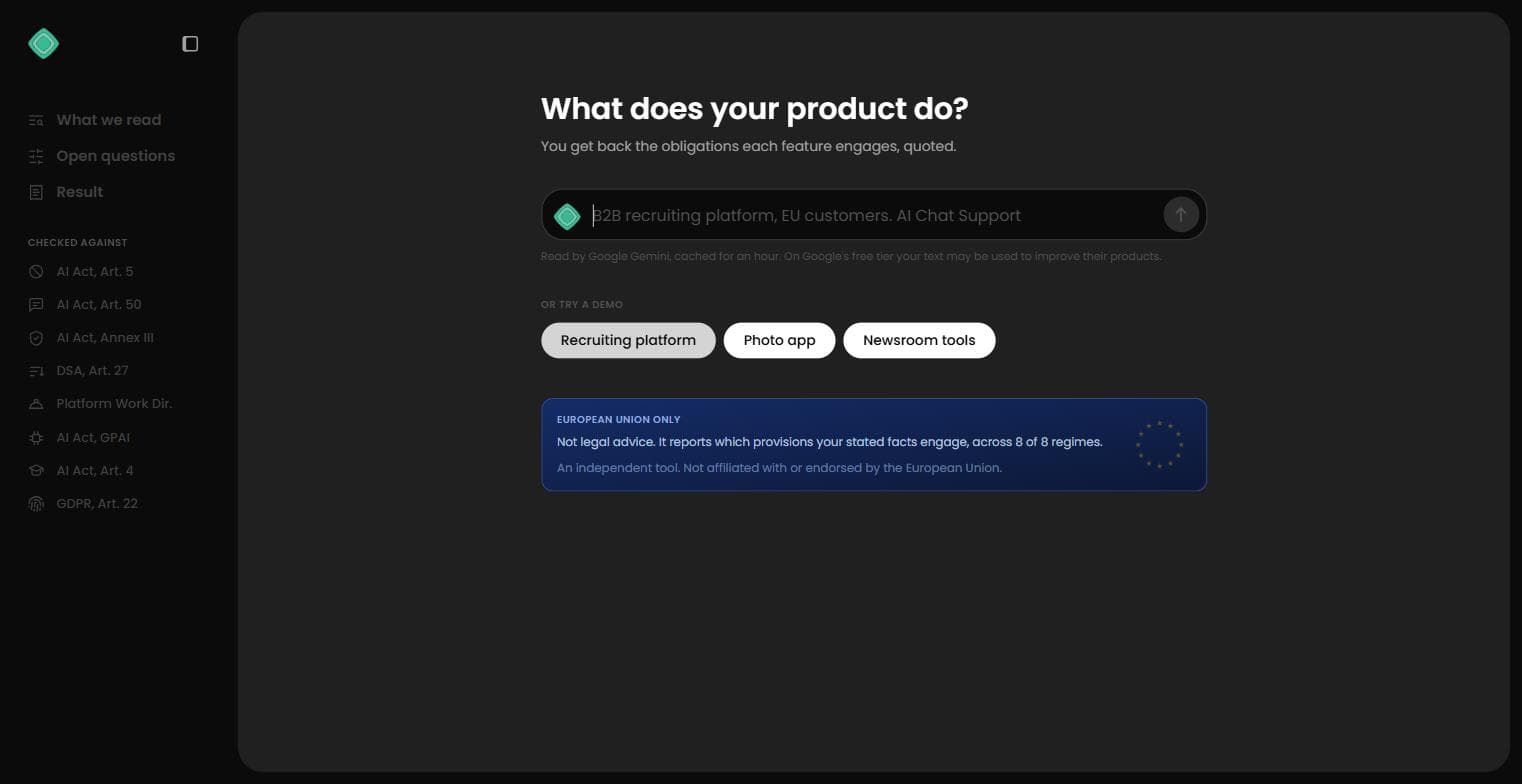
An AI model maps a product description onto a fixed sheet of 38 facts. Code then checks those facts against a structured list of 36 obligations taken from the acts themselves. No AI touches the legal conclusion, so the same description always returns the same answer, and the app asks only the questions that would change the result.
What I ruled out
One AI step, deliberately, instead of AI-as-judge with multiple agents. Fewer places for it to break, and fewer calls for it to make. The AI does the mapping from the description; it does not do the judgment. Everyone is hyping AI-as-judge, and for this product it wasn't a good choice.
How I know it works
Five offline checks (fixtures, carve-outs, deadlines, hygiene, and a reader validator) plus a live eval of the AI model against 15 fixtures: 14 agree with the deterministic reader, and the one difference is a judgement call. When the model is unavailable it falls back to regex, and says so rather than answering quietly.
Limits
It informs, it does not advise. Not legal advice. It is built for a quick, informed decision about what to look at, not for legal reliance.